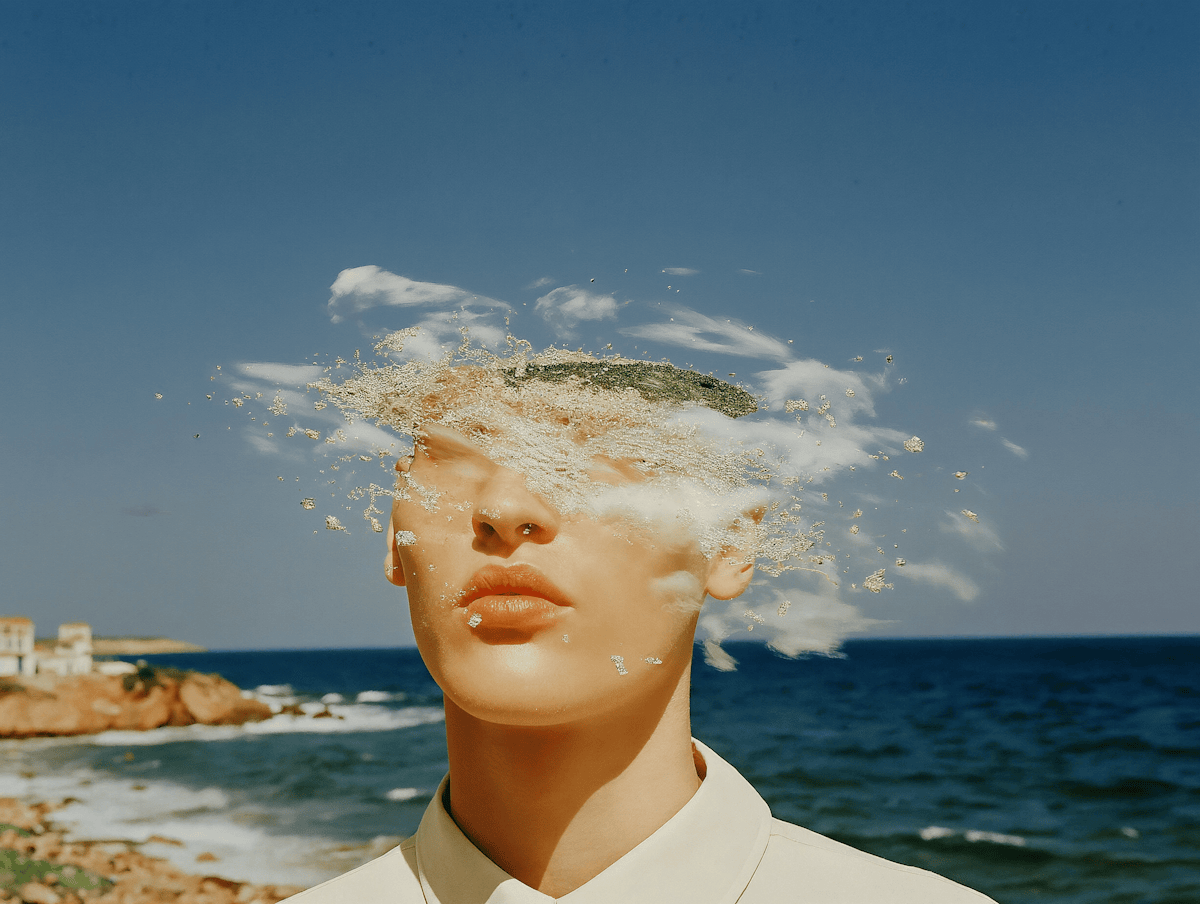

AI image generators are everywhere. Businesses, artists, and entrepreneurs are using them to create logos, illustrations, and marketing visuals every day. But a serious legal question sits underneath all of this activity: who, if anyone, owns the copyright to an image that an AI system made?
The answer comes from copyright law, and understanding it requires looking at some specific legal rules that courts and the U.S. Copyright Office have applied to AI-generated work.
Copyright Law Requires a Human Author
The first thing to understand is that U.S. copyright law has always required a human being as the author of a work. This isn’t a new rule that was invented for AI. It comes from the U.S. Constitution, which gives Congress the power to protect the work of “authors”, and courts have consistently held that word means a human being, not a machine.
In 2023, a federal court in Washington, D.C. addressed this question directly for the first time in Thaler v. Perlmutter. The plaintiff asked the Copyright Office to register an image that his AI system had created entirely on its own, with no human creative input at all. The court said no.
It held that “copyright law protects only works of human creation” and that “human authorship is a bedrock requirement of copyright.” Because the plaintiff said the AI did everything by itself, the image couldn’t be protected. So the starting point is clear: a work made entirely by an AI, with no human creative involvement, cannot be copyrighted.
What About When a Human Is Involved?
Most AI-generated images don’t come from a system running completely on its own. A person types a prompt, makes choices, and decides which output to use. Does that count as human authorship?
This is where the law gets more nuanced, and where the Copyright Office’s January 2025 report on AI and copyrightability provides important guidance.
The legal test isn’t just whether a human was involved in the process. It’s whether the human controlled the expressive elements of the final work, the specific details that make the image look the way it does. Courts have consistently held that supplying an idea or a description is not the same as authoring an expression of that idea.
In Community for Creative Non-Violence v. Reid (1989), the U.S. Supreme Court explained that “the author is the party who actually creates the work, that is, the person who translates an idea into a fixed, tangible expression.” Telling someone what to create is not the same as creating it yourself.
Why Prompts Alone Usually Aren’t Enough
When a person types a prompt into an AI image generator, they are giving the system instructions, describing what they want to see, but the AI system decides how to turn those instructions into an actual image. The specific colors, shapes, lighting, composition, and details are all determined by the system, not the person.
The Copyright Office concluded in its 2025 report that prompts function as instructions that convey unprotectable ideas. The user doesn’t control how the AI interprets and executes those instructions. As one text-to-music platform acknowledged on its own website, even very detailed text prompts “cannot fully define” the output, because “the same text describes an infinite number of possible” results.
The fact that the same prompt can generate many different images each time it’s used also shows that the user isn’t truly controlling the final result. The AI system, not the person, is making the expressive choices that determine what the image actually looks like.
Revising and resubmitting prompts many times doesn’t change this. Each new submission is another roll of the dice. The time and effort put into prompt refinement don’t matter legally because copyright protects creative authorship, not hard work. The Supreme Court made this clear in Feist Publications v. Rural Telephone Service Co. (1991), holding that labor alone (“sweat of the brow”) is not enough to earn copyright protection.


When Human Authorship Is Present
There are situations where a human’s creative contribution is strong enough to support a copyright claim, even in AI-assisted work.
When the Human Inputs Their Own Creative Work
If a person creates an original drawing, photograph, or other work and uses it as an input into an AI system, their creative expression is already present before the AI does anything. If that original work is clearly visible in the AI’s output, the human author owns the copyright in those elements. The Copyright Office registered a work called Rose Enigma on this basis, noting that the registration covered “unaltered human pictorial authorship that is clearly perceptible in the deposit and separable from the non-human expression that is excluded from the claim.”
When the Human Selects and Arranges AI-Generated Elements Creatively
Copyright can also protect the way a human organizes and combines AI-generated material, the selection, arrangement, and coordination of elements, if those choices reflect genuine creativity. In an early case involving a comic book (Zarya of the Dawn), the Copyright Office found that the creative choices made in selecting AI-generated images and arranging them with human-authored text throughout the work were protectable as a compilation. The protection covered the human author’s arrangement, not the AI-generated images by themselves.
When the Human Substantially Modifies the AI Output
If a person takes an AI-generated image and makes meaningful creative changes to it, those modifications may be copyrightable. The protection would cover what the human added, not the underlying AI-generated content.
Copyright Also Has an Idea/Expression Rule
One more important legal principle: copyright only protects expression, not ideas. This is written directly into the Copyright Act at Section 102(b), which says copyright does not extend to “any idea, procedure, process, system, method of operation, concept, principle, or discovery.”
A text prompt is, legally speaking, an idea or a set of instructions. The fact that a prompt might itself be creative and well-written doesn’t automatically make the AI’s output copyrightable. The prompt and the output are two separate things under the law.
The Copyright Office’s Conclusions
After receiving more than 10,000 public comments and conducting extensive research, the Copyright Office released its conclusions in January 2025. The main takeaways are:
- Purely AI-generated material cannot be copyrighted.
- When AI is used as a tool to assist a human creator, copyright protection for the output remains fully available.
- Copyright protects the original human expression in a work, even if the work also includes AI-generated material.
- Prompts alone, under current technology, do not give a user enough control over the AI’s expressive choices to establish authorship in the output.
- Human authors can claim copyright in expressive elements they contributed that are perceptible in the output, as well as in creative selections, arrangements, or modifications of AI-generated material.
- These questions need to be analyzed case by case; there are no bright-line rules that apply to every situation.
The Office also concluded that no new legislation is needed at this time. The existing legal framework is flexible enough to handle these questions as they arise.
What This Means Commercially
For anyone selling, licensing, or building a business around AI-generated images, these legal principles create real practical stakes.
Ownership and the Ability to Transfer Rights
If no human authorship is present in a work, no copyright exists, and there’s nothing to sell or license. A buyer or licensing partner will often require confirmation that the seller actually owns the work. Without a defensible account of human authorship, that representation is hard to make.
AI Training Data and Infringement Risk
AI image systems are trained on large datasets of existing images, many of which are protected by copyright. Several lawsuits are currently working through the courts, alleging that AI outputs can infringe on the copyrighted works used to train those systems. The legal outcome of those cases is not yet settled, but it is a real risk for anyone commercializing AI-generated imagery.
Platform Rules on Commercial Use
Most AI image platforms have terms of service that draw a line between personal use and commercial use of generated images. Some platforms prohibit commercial use on certain subscription tiers. Others require attribution or limit exclusivity.
Using AI-generated images commercially without reading the applicable platform terms can create contract problems on top of any copyright issues.
Copyright Registration
Registration is available and strategically valuable for AI-assisted works that do contain human authorship. A registered copyright allows the owner to sue for infringement in federal court and, if the registration was obtained before the infringement occurred, may allow recovery of statutory damages and attorney’s fees.
Applicants must disclose which portions of a work were AI-generated and claim only the human-authored elements. Leaving out that disclosure can put a registration at risk of being invalidated later.
Copyright Law Draws a Clear Line at Human Authorship
Where a person’s creative expression, not just their instructions, is reflected in an AI-generated image, the law can protect it. Where the AI system is the one making the expressive choices, it cannot. The practical challenge for creators working with these tools is understanding which side of that line their work falls on, and structuring their process to build the clearest possible case for human authorship where it matters.
When to Speak with an Intellectual Property Attorney
The law around AI-generated content and copyright is moving quickly, and many creators are making commercial decisions based on incomplete or outdated information. You don’t need to have a dispute in progress to benefit from legal guidance on this topic.
Evaluating Your Protection Strategy
If you are using AI tools in your creative process, an intellectual property attorney can help you evaluate your protection strategy before you build a business around assets that may not be legally protectable. That evaluation might include reviewing your workflows, identifying where human authorship is present, and structuring your registration approach accordingly. Acting early gives you more options than trying to fix gaps after the fact.
Before You Commercialize AI Work
Before you sell, license, or assign rights to AI-generated images, it’s worth getting clarity on what you actually own. An attorney familiar with intellectual property law can review platform agreements, assess the registrability of your work, and help you structure transactions that accurately reflect what rights are being transferred.
If You Receive an Infringement Claim
If a third party asserts that your AI-generated images infringe on their copyrighted work, the response requires careful analysis of the training data claims, the similarity between works, and the applicable defenses. These claims are still new enough that the legal standards are not fully settled. Getting competent legal counsel involved early is the most straightforward way to protect your position.
Contact The Fried Firm for a Free Consultation
AI image tools are moving faster than the law, and that gap creates real risk for creators and entrepreneurs who are building businesses around this technology. The Fried Firm works with creators, startups, and businesses on copyright registration, ownership questions, and commercialization strategy for AI-assisted work. Contact us to discuss your situation and get a clearer picture of where you stand.
 Share
Share