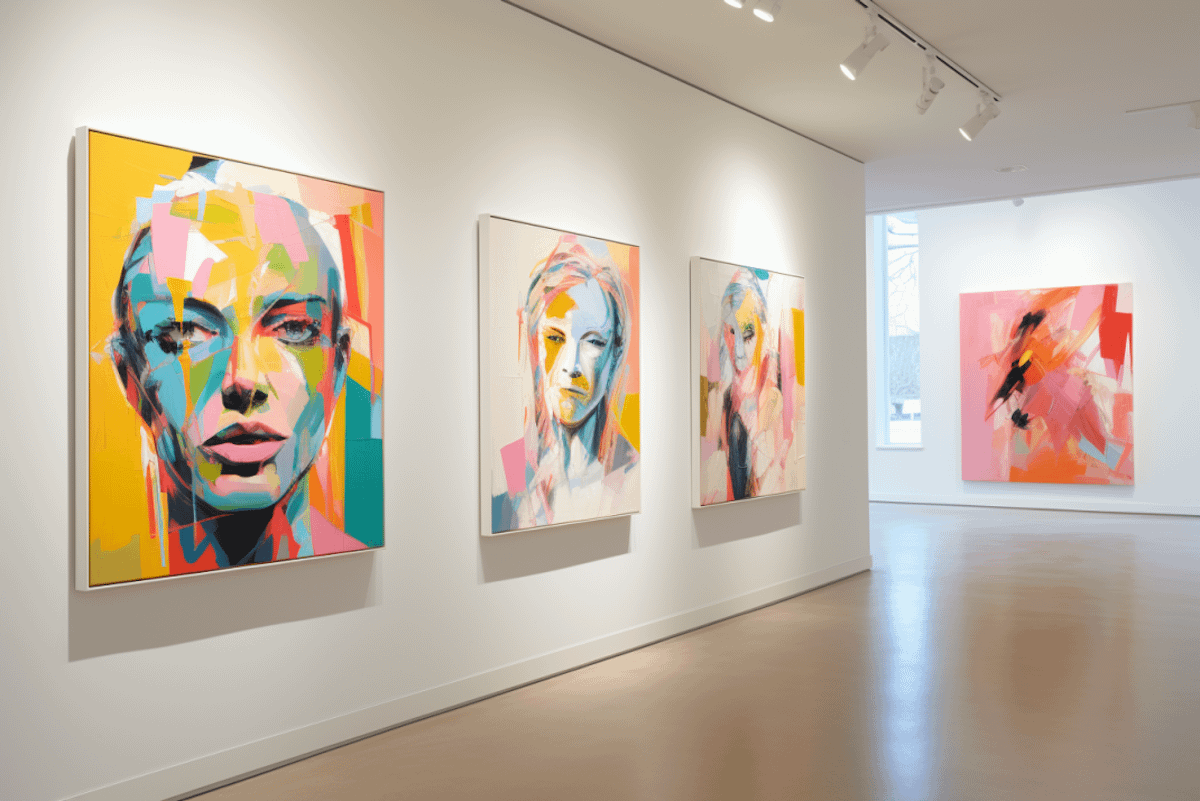

“Good artists borrow, great artists steal.” Pablo Picasso purportedly said this, long before AI art and copyright infringement would become hot button issues in the creative world today. While some derivative works are both legal and considered to be a class of artistry all on their own, current copyright law debates whether or not AI art can qualify. How does AI fit into the landscape of derivative works, and can creative expression when assisted by AI qualify for copyright protections? The Fried Firm breaks it down.
US Copyright Laws for Art
The US Copyright Office protects visual and graphic artists from unauthorized use, distribution, and reproduction of their art. Title 17 of the US Code (Copyright Act of 1976) established federal rights to authors, inventors, and artists for their original works. Under this law, the copyright holder has the exclusive rights to their work, unless specified otherwise. The Copyright Act of 1976 protects:
- The right to make, sell or distribute copies of an original work
- The right to adapt the work
- The right to publicly display the work (including on the internet)
- The right of owners to deny access to work
US copyright laws are only for works with human authorship. In order to be protected by copyright, Section 308 of the Compendium of US Copyright Office Practices Third Edition states:
“To qualify for copyright protection, a work must be original to the author,” which means that the work must be “independently created by the author” and it must possess “at least some minimal degree of creativity.” Id. at 345 (citations omitted).
This is an important distinction, because it does not include work whose authorship is attributed to artificial intelligence. AI art copyright rulings are still in flux, as the emerging technology remains a subject of consideration by the courts. However, advocates of AI argue that significant human input and expression is involved in the creation of some machine-assisted works, similar to the field of photography. In the case Burrow-Giles Lithographic Co. v. Sarony, the Court held that there was “no doubt” the Constitution’s Copyright Clause permitted photographs to be subject to copyright. Why are the same protections not applied to AI?
Is AI Art Copyrighted?
The human authorship component ensures that copyright protections cannot yet be extended to AI generated works. In other words, only humans are entitled to property protections under the law, and the Copyright Act is designed for intellectual property protection. While tech companies and even animal rights activists have attempted to challenge this principle in the past, at the moment the Supreme Court has held firm.
Recent rulings have also upheld human artists’ rights to pursue copyright violation claims against AI art companies Midjourney, DeviantArt, Stability AI and Runway AI. However, the August 2024 ruling did not decide the main point of contention: whether or not training the AI algorithm on artists’ work without their consent was fair use, or in violation of their copyright. This question is central to understanding whether or not LLMs are in their very existence in violation of copyright law.
An initial ruling from a federal judge in California in the landmark case Bartz v. Anthropic holds that the Claude LLM, Anthrophic’s AI program, was able to train on authors’ works that were legally accessed via licensing agreements, as the output was “exceeding transformative”, hence qualifying it for fair use under Section 107 of the Copyright Act. However, Anthropic also chose to download 196,640 pirated books from sites like Books3, Library Genesis, and Pirate Library Mirror in order to avoid what the company’s cofounder and CEO Dario Amodei characterized as “legal/practice/business slog.” Downloading and using the pirated work (around 7 million books by the time the company was finished training Claude), rather than legally licensed works, jeopardizes the company’s over billion dollars in annual revenue.
What is a Derivative Work?
Artists stand on the shoulders of giants when they create something new. It has been said that it is impossible to come up with a truly original idea in the arts, and that may be true. Many of the greatest works are riffs or adaptations of art that has come before.
Consider Renaissance paintings retelling Biblical stories or Greek myths, or studies done in the style of Realist, Romantic, or Impressionist artists. Some of these works go on to be considered original art, and some are simply copies. The difference lies in how much originality the second artist brings to their new work.
Does the art contain a stylistic difference or new point of view? Or is it simply a “rip-off”? These distinctions are important because they allow for the concept of derivative art. Derivative art in copyright law is a work of art that substantially draws from a preexisting work. Some examples might be:
- Translations
- Musical “covers”
- Art reproductions
Derivative works are legal when the second maker receives copyright permission from the original artist, or when the base art is in the public domain. Some “fair use” exceptions also exist, such as when a teacher shows a work of art for educational purposes, when a work is reproduced in parody, or when the display of a work does not compete with the original.
Furthermore, derivative works can qualify for their own copyright protections when they contain meaningful differences, enough to be considered “new” art. The copyright of derivative works under these circumstances can be monetized and subject to legal protections. However, only the new elements are included in the derivative work copyright – not the original material.

Is Fan Art Copyright Infringement?
Fan art falls into a grey area of copyright law. Technically, many fan art depictions qualify as copyright infringement, since they are derivative work without formal permission from the original copyright holder. However, they often are let slide or may fall under the aforementioned “fair use” category. Fair use is when a derivative work is used for non-commercial, nonprofit, educational, or transformative purposes. In order to discover if fan art is copyright infringement, you might consider:
- Is it commercial? Has the work been monetized in any way, such as offered for sale on t-shirts, tote bags, or licensed for online download?
- Is it in competition with the original? Does it harm the potential market for the original copyrighted work?
- Is it educational? Art schools, music making programs, film courses and more are able to distribute copies of work when they are used for educational purposes.
- Is it transformative? Fan art, in order to qualify for its own copyright protections, must contain new expression. At the moment, AI generated fan art is not considered as copyrightable under US law.
- Does the maker have consent? If you are able to access the original copyright owner, you may request their permission to make your own art using their original.
How Do I Copyright My Art?
Working with a copyright lawyer can help you ensure that what you have made is protected by US and even international law. Visual artists should know that certain common symbols such as emojis as well as typography are ineligible for copyright protection. However, some stylized logos, minimalist designs, and more may be considered for trademark protection when copyright protection is inaccessible. A creative professional law firm like The Fried Firm can help advise you about the differences, as well as ensure that what you have created qualifies for registration. In cases involving AI art, we can help you avoid litigation and future issues by advising you about up-to-the-minute copyright law developments.
At The Fried Firm, one of our copyright lawyers can help file your claim accurately, register it for public record, as well as follow up with the US Copyright Office to ensure that there are no challenges to your filing.
Your copyright, once finalized, becomes an asset that can be transferred, sold, licensed, used as a security in certain situations, and passed on as part of your estate.
How The Fried Firm Can Help with Infringement Claims
The Fried Firm can also assist with infringement claims. When you register a copyright, you earn certain rights, including the right to protect it using the full might of the law. In cases involving violation and infringement, our firm may be able to:
- Issue a DMCA takedown notice for online use
- Send a cease and desist letter to violators
- File a lawsuit and make a claim for monetary damages
- Negotiate for a settlement out of court
- Represent you in court, if necessary
- Write, review, and manage licensing agreements
- Track registration records for future issues
- Advise you about fair use claims, including education, parody, reporting, and commentary
- Defend you against copyright violation claims
- File for state and international protections.
Need help with the specifics of your copyright claim? The Fried Firm is a NYC boutique law firm designed to assist creatives with protecting their work from the ground up. For a complimentary 15 minute consultation, contact us today.
 Share
Share